The Prostate
 |
Prostate cancer kills more than 30,000 men per year in the United States. However, with early diagnosis it is possible to be cured from cancer of the prostate and have a normal life.
Prostate Anatomy
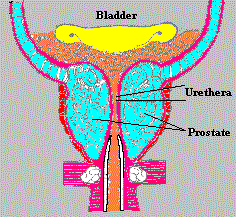
The prostate is a gland located in the lower region of the male human body between the bladder and the urethra. The urethra is the channel that drains the urinary bladder. It passes through the prostate. The prostate is the size of a walnut and plays a part in sexual function.
|
Benign Hyperplasia of the Prostate
Beginning at age 40, the prostate, under the influence of male hormones, starts to enlarge. As it gets bigger, it will squeeze the urethra that passes through it causing problems with urination. These problems consist mostly of frequency (frequent urination), hesitancy (difficulty in starting and voiding), nocturia (getting up at night to pass urine), and sometimes urinary retention (not being able to void).
The pressure that builds up in the bladder with incomplete emptying can cause urinary infections. Back -pressure into the kidneys may result in failure of the kidneys.
Prostatitis
This is another category of prostate disease and is usually caused from inflammation of the prostate. The symptoms are lower back pain, pain in the perineum and pain in the lower part of the body.
Cancer Of the Prostate
A more serious disease is cancer of the prostate. It starts in the prostate and gradually grows from the prostate on out. It may spread by blood or lymph into the bones and if not treated may lead to death.
Diagnosis: This made most commonly by a blood test called PSA (Prostate specific antigen). Digital (finger) examination of the prostate is also valuable. If a nodule or an area of increased firmness in the prostate is felt, then the following tests are usually performed.
- Biopsy - Obtaining a sample with a needle
- Cystoscopy - Inspecting the bladder and the prostate with a special instrument.
- Ultrasound of the prostate- Imaging with sound waves.
If the biopsy is positive for cancer, then further studies are done to make sure the cancer is contained in the prostate. These studies are as follows:
- Bone Scan -If PSA is more than 10. A nuclear study of the bones whereby a mild radioactive chemical is injected into a vein and the bones are scanned.
- Chest X-ray or CT scan of the chest
- Blood chemistry survey.
- Computerized Axial Tomography of the Pelvis - If the PSA is more than 10. This is also known as a CT Scan, a special X-ray to check on the enlarged lymph nodes or extension of the tumor outside the prostate. This test is optional.
If all these tests are negative, then most probably, the cancer is contained.
Treatment
- Radical Prostatecomy
- Radiation therapy- a. IMRT b. Proton
- Radioactive seeds
- Cryotherapy
- Chemotherapy
- Hormonal therapy
- Observation
- High frequency ultrasound therapy
- Immunotherapy
Treatments for Benign Disease of the Prostate
Medical Treatment
- Alpha-Blockers: are medications that relax the prostate and make urination easier. Undesirable side effects may include low blood pressure and dizziness.
- Proscar or Advodart: These are medications that may be able to shrink the prostate. However, it usually takes 6 months. Side effects include sexual dysfunction and changes in the PSA which may make detection of cancer harder. Recent literature states that taking these medications for a long time may decrease the incidence of low grade cancers. However, they may increase the incidence of fast growing cancers. It is to be mentioned that these medications need to be taken for life.
Surgical Treatment and Other Procedures
1. TURP (Transurethral Removal of the Prostate): This procedure is done without an incision through the urethra by means of a scope. Laser energy can be used in some cases, making the hospital stay shorter.
2. Open Prostatectomy: This is done for very large prostates using an incision in the lower part of the body.
3. Transurethral Microwave Therapy: This is a newer procedure whereby the enlarged prostate is treated with microwave. The treatment is given through a catheter without surgery. This is performed in the office. The procedure time is less than 30 minutes. Most patients are very happy with the outcome.
Complications of a Prostatectomy
1. Sexual Dysfunction. This happens only in 5% of patients who undergo surgery for benign prostatic enlargement. However, after radical surgery for cancer, even with the newer nerve sparing techniques, sexual dysfunction is a common problem.
2. Leakage of Urine. This is very rare after surgery for benign disease, but not uncommon after prostatectomy for cancer.