Vasectomy
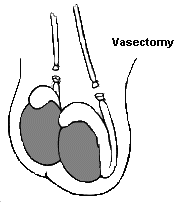 |
A Vasectomy is a minor surgical procedure. It is done to remove segments of the vas for the purpose of preventing pregnancy. This surgery is usually performed under local anesthesia or IV sedation.
Complications From Surgery
Swelling: A small amount of swelling is not unusual. However, if it reaches about two to three inches in diameter, then some problems may be associated with that. It is very hard to make an incision and drain the swelling since the swelling is mostly spongy tissues in the scrotum. That makes it even more important to follow directions very carefully. Proper rest will prevent the swelling.
Infections: Infections are very rare but may occur. If this happens, it may cause chills and fever. A prescription for antibiotics may be needed.
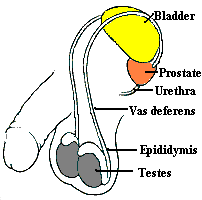
Epididymitis: Epididymitis is a swelling of the epididymis. The epididymis is a structure that drains the testicles and acts as a conduit for the sperm to travel to the vas. In some patients it gets inflamed a few months to a few years after the vasectomy. Most of the time antibiotics, heat and rest will eliminate it. However, in some cases, it becomes necessary to do a minor surgical procedure to remove the epididymis.
Although it has not been proven to be true it has been mentioned in some articles that after a vasectomy patients are more prone to have coronary heart disease or prostate cancer. Also, there is a rare form of infection that may set in after a vasectomy called Necrotizing fasciitis that may cause death. Necrotizing fasciitis is usually associated with immunocompromised patients; such as patients with AIDS.
|
PROCEDURE
The patient is seen initially in consultation at least 48 hours before the vasectomy. This gives the physician a chance to talk to the patient and his wife and explain the different aspects of the vasectomy.
He will also discuss recovery time as well as different complications. He will then do a Physical Exam. It is extremely important to have this initial interview. Our statistics show that 10% to 15% of the patients do not proceed after the initial interview. Most vasectomies are done as an outpatient. IV anesthesia, general anesthesia use is most common, but occasionally a local anesthetic is used. On the day of the vasectomy, the patient will arrive at the clinic about two hours before the actual time of surgery. It is imperative that the patient's wife or friend be available to take him home after the procedure.
After anesthesia is started the patient is scrubbed with a special surgical solution, and two incisions are made on the front part of the scrotum. The incisions average about 1/4 inch in length. Part of the vas is removed to prevent the two ends from reconnecting. Each end is then tied twice, and the skin is sutured on each side. The sutures are absorbable and within ten days will have fallen off. There is no need to remove the sutures later. After surgery, a tight dressing is applied, held in place with a scrotal support. The patient is sent home to rest for three days as instructed. Pain pills are prescribed to minimize patient discomfort.
CARE AFTER THE PROCEDURE
- The patient should be off work at least for three days (72 hours) following a vasectomy. It is important that he stay off his feet for that period of time and not use a recliner.
- The patient should not drive or ride for long distances for at least two weeks following the surgery.
- The patient should not strain or lift heavy objects for these two weeks (five pound limit).
- The patient should use an ice pack for the first 24 hours. Please discontinue using the ice pack after 24 hours.
- The patient should use an athletic supporter for at least two weeks following the vasectomy.
- The patient should not take showers or baths for 48 hours.
- The patient may have intercourse after 1 week.
- If the wounds heal with some drainage, cleanse with hydrogen peroxide solution daily, cover with Neosporin ointment, and dress with gauze.
- The patient will need to take at least two separate semen specimens to the hospital out-patient laboratory for a sperm count. The first should be taken 1 month or approximately 20 ejaculations after the surgery. The second taken in two month or 30 ejaculations.These specimens must be collected in a rigid container. Remember, during this time, precautions should still be taken against pregnancy until after the specimens show no sperm. We also recommend a yearly semen analysis to make sure the vas have not reconnected (1% chance).
CHARGES
My office manager will explain the charges for the procedure. It is our policy that we receive payment at the time of the initial visit. There is a separate charge from the hospital or the outpatient surgery center. Parts of the vas are sent to Pathology for conformation of the diagnosis and to check for pathology. Therefore you should also expect a separate bill from the pathologist. You will receive this in the mail after the vasectomy. The lab where the sperm count will be done will also charge you separately for the service.
Reversal of a vasectomy can be done. The success rate is about 90%. However the best results are obtained within 5 years after the vasectomy.